Ledgy / Case study
Understanding startup teams
Understanding startup founders and investors through research, and turning their needs into actionable personas.

- My role
- UX Researcher
- Timeline
- 2021
- Team
- 1x Product Manager, 3x UX Designers and Researchers, 1x Software Engineer, 1x CX Manager
Understand first.
Design with purpose.
Ledgy suspected that its pricing did not fit the needs of small startups. Conversations with the Customer Experience team also pointed to limited product understanding and difficulty upselling. As a four-person research team at Hochschule OST, we explored what founders needed before assuming that price was the main barrier.
We shifted the focus from “how do we encourage upgrades?” to “what do founders and investors actually need?”
From conversations
to patterns.
We analysed support conversations and interviewed the Customer Experience team to shape our research questions. Recruitment took place mainly through LinkedIn, with funding stage helping us identify relevant participants. We explored founders’ existing tools, equity knowledge, and reasons for adopting—or avoiding—a paid platform.
We coded interview evidence, grouped recurring themes in an affinity map, and compared roles and behavioural patterns to develop the personas. Survey responses provided additional context, although missing demographic questions limited how strongly they could validate the profiles.
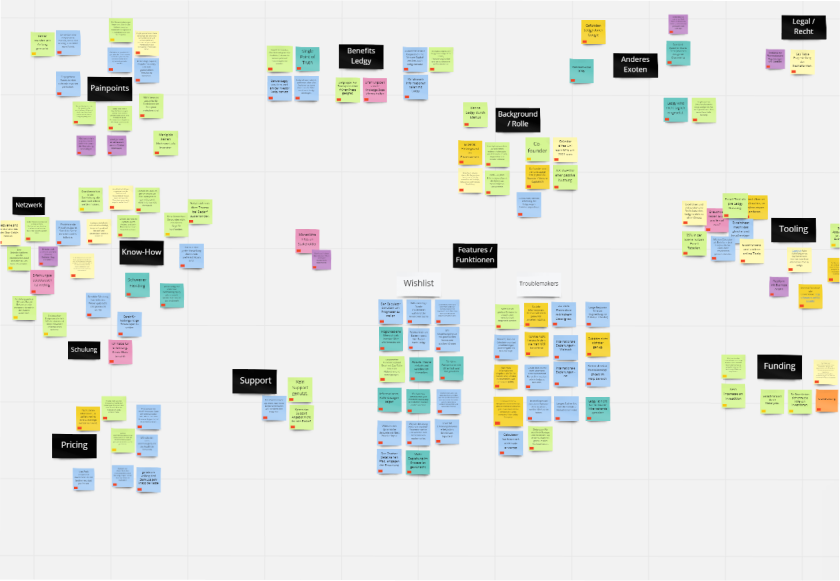
Excel already felt sufficient.
For some founders, spreadsheets met their current needs. Switching meant extra cost and setup effort without a clear enough benefit.
Understanding came before upgrading.
Unfamiliar equity terminology and unclear plan features made it harder to recognise what the product could do for them.
Stage and ownership mattered.
A young company with few shareholders had different needs from a growing business with more complex equity. Self-funded founders could have little need for the platform.
A shared picture
of the people behind the plans.
David / First-time founder
Building a first startup while learning how funding and equity work. Needs clear explanations and guidance before the value of a specialist tool becomes apparent.
Patrick / Founder and investor
Combines experience as a founder with investments and informal coaching. Needs to manage interests across multiple startups, rather than a single company.
Chris / Mentor and coach
Helps new founders navigate the challenges he has experienced himself. His focus is guidance and knowledge sharing, with different motivations from an investor.
Ralf / Self-funded founder
The non-persona: prioritises independence and grows without external investors. Although part of the startup ecosystem, his ownership needs give him little reason to adopt Ledgy.
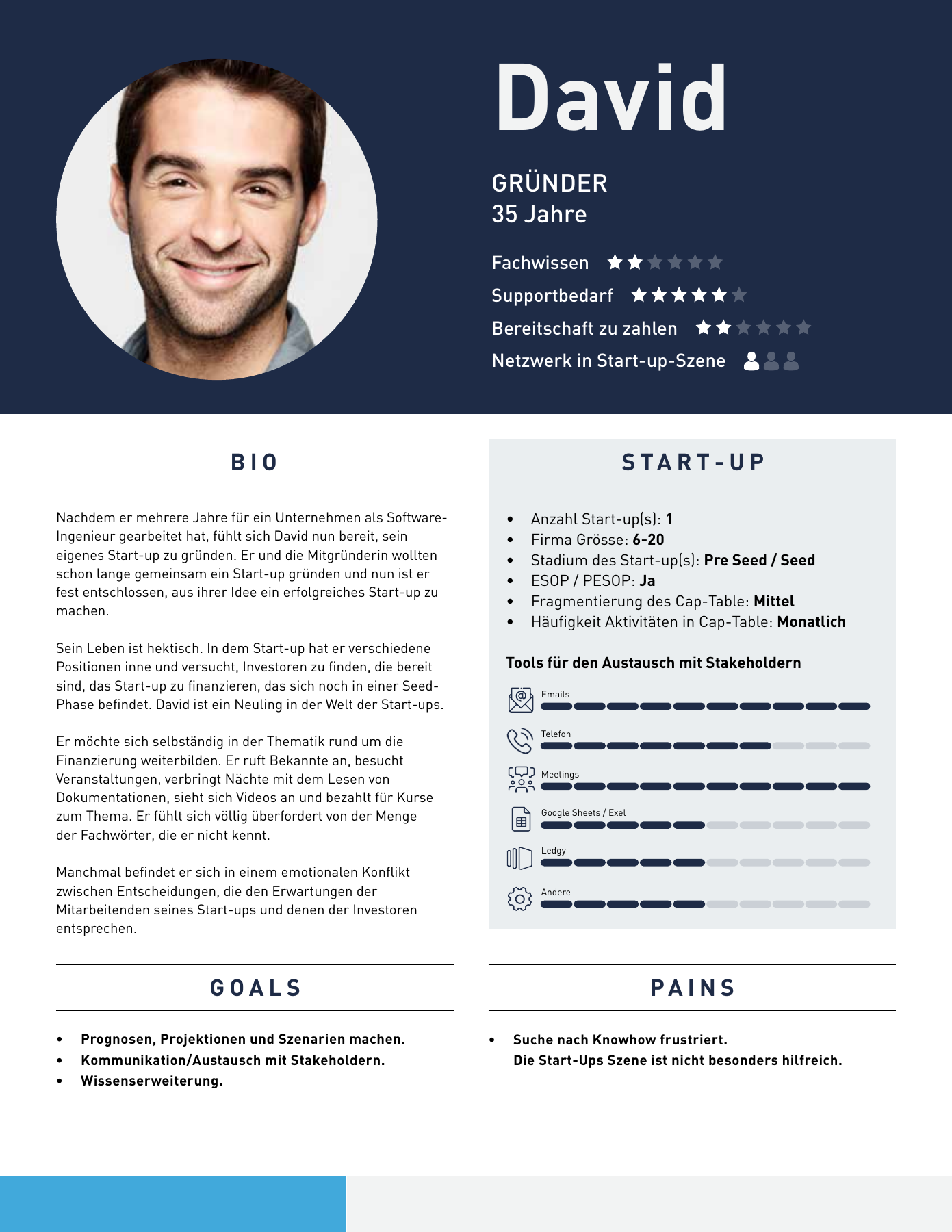
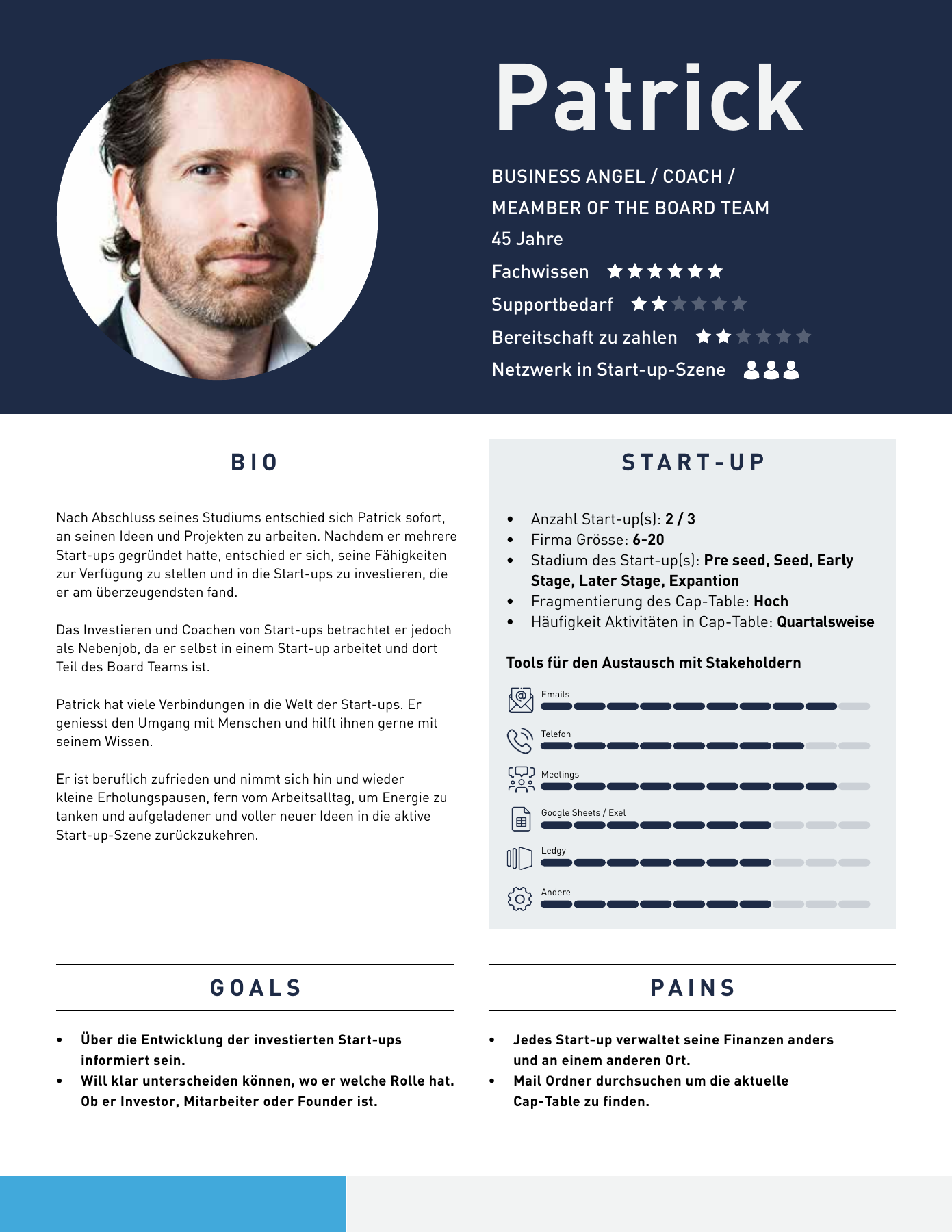
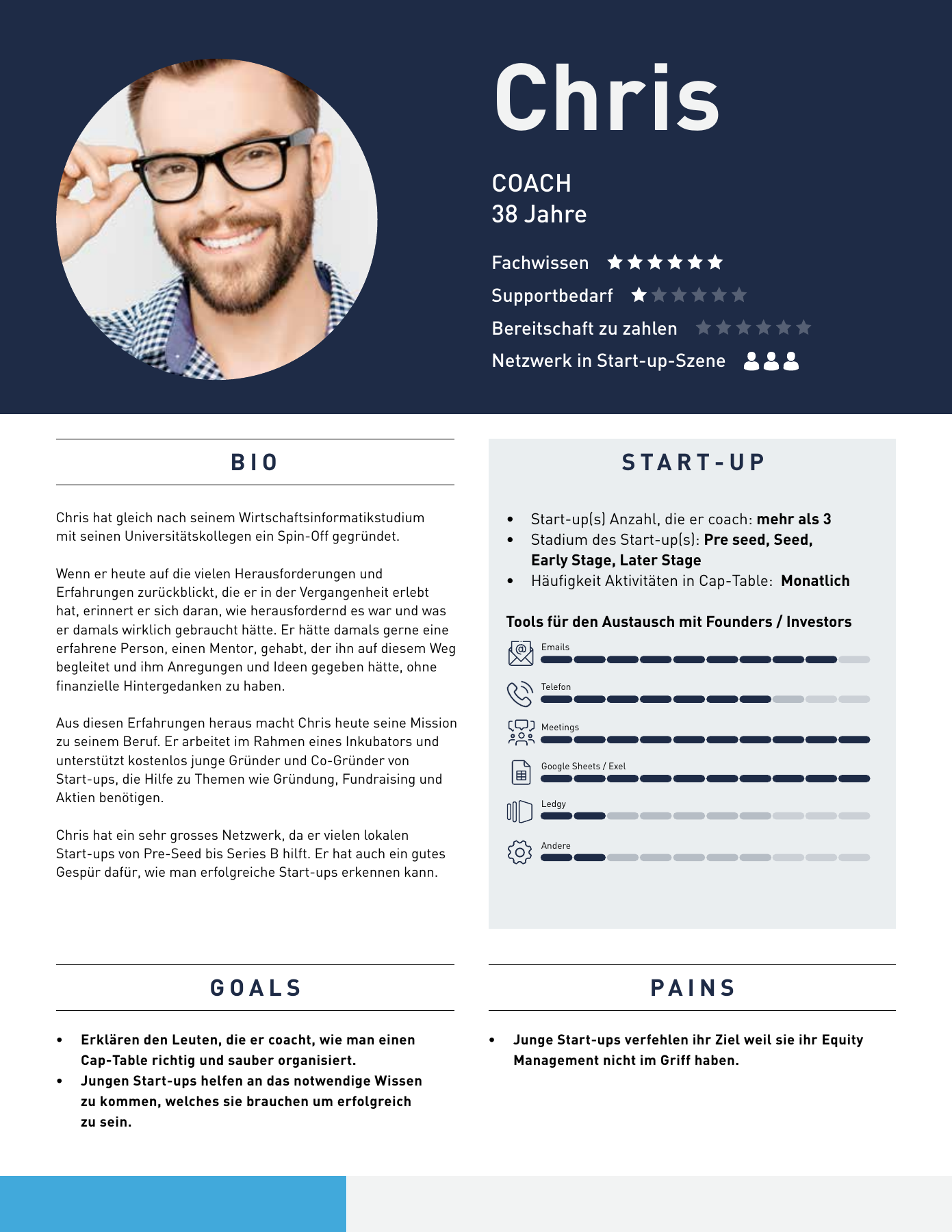
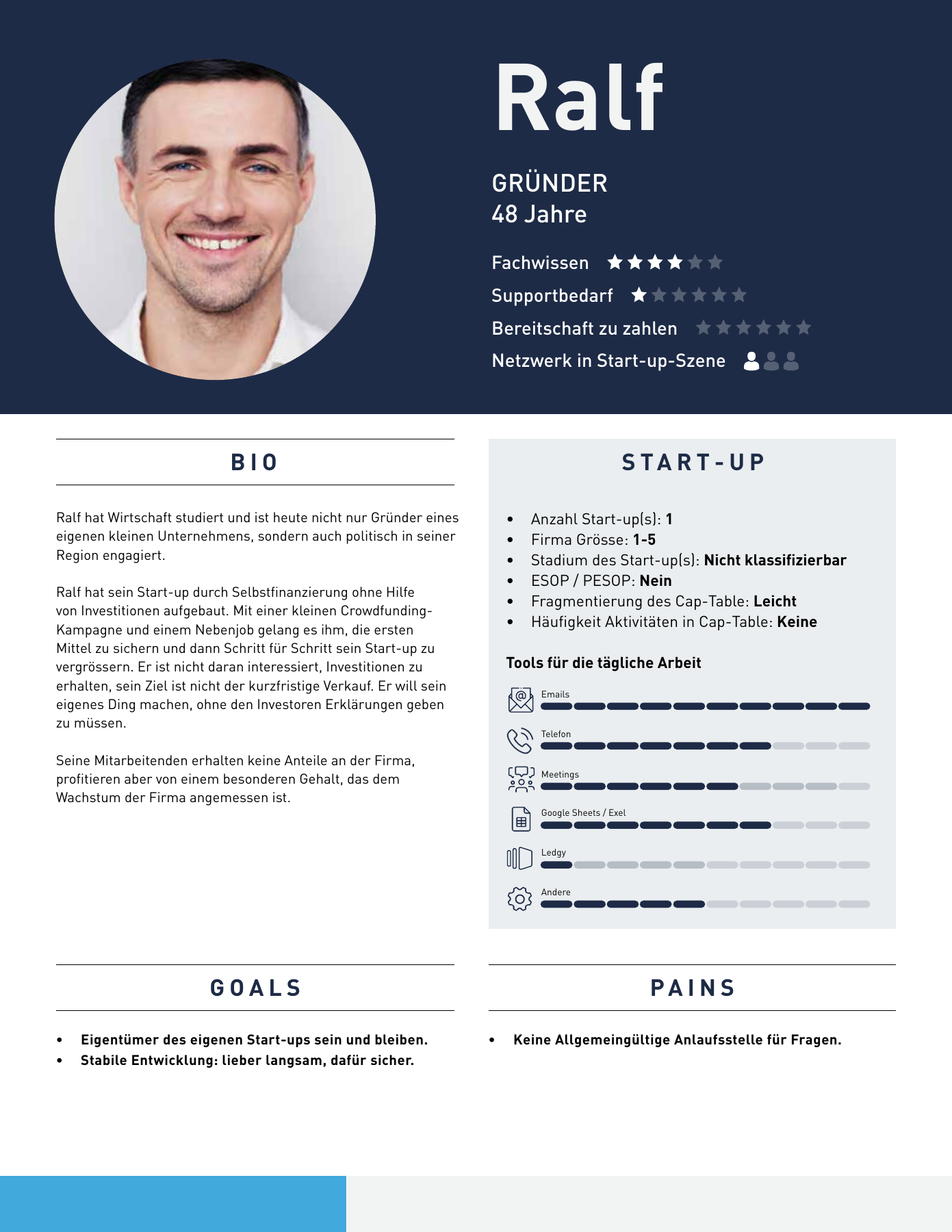
Research-based profiles, summarised from the original deliverables. These represent patterns across participants, not individual interviewees.
A clearer audience.
A more relevant offer.
The research reframed the pricing hypothesis: willingness to pay also depended on knowledge, perceived value, and the complexity of the startup’s ownership structure. Three personas and one non-persona made these differences actionable. Ledgy subsequently prioritised sales to larger, more established companies and developed educational activities, including community events, to build understanding among early-stage founders.
These outcomes describe research deliverables and subsequent business decisions. We did not measure changes in revenue, sales conversion, or upgrade rates.